
How to
Recording piano
The piano can be recorded in a variety of ways, with different miking methods yielding markedly different results. These are techniques engineers have let us photograph on their sessions.
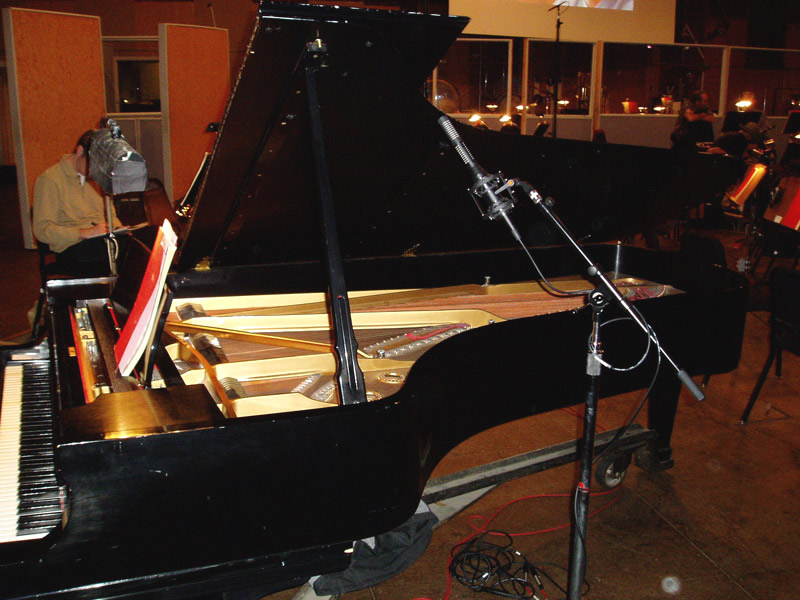
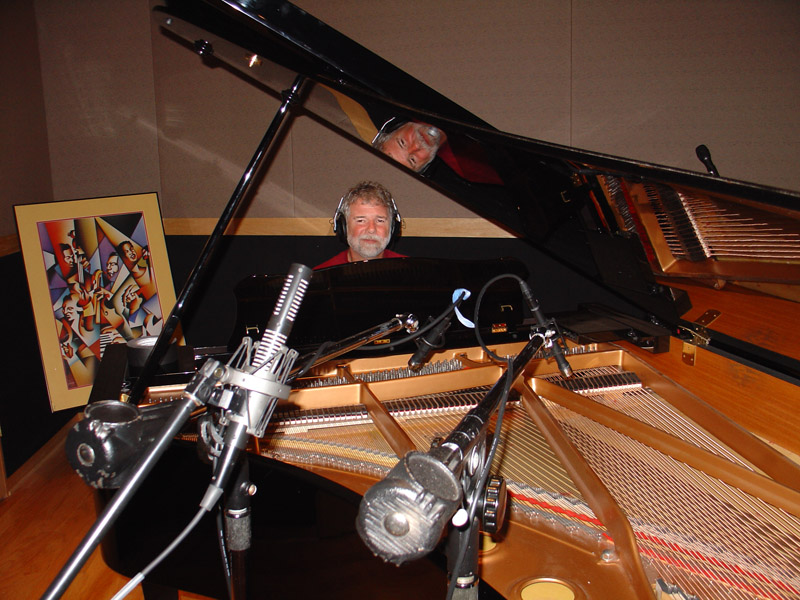
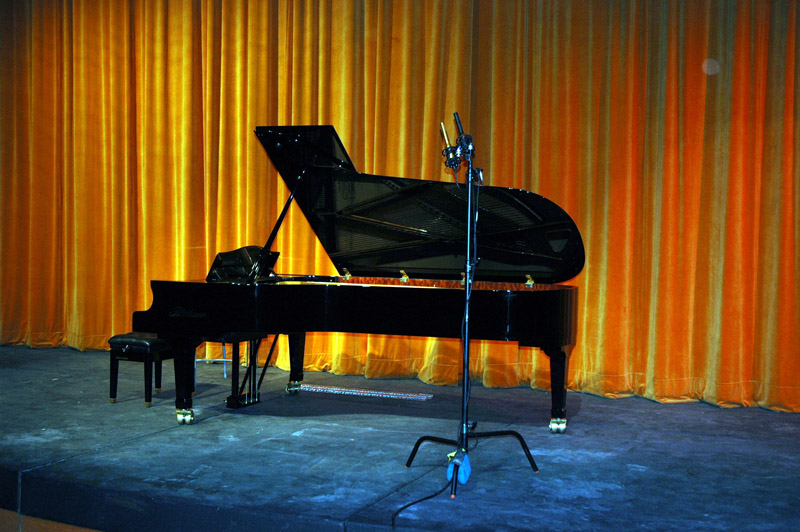
The piano can be recorded in a variety of ways, with different miking methods yielding markedly different results. Classical recordings often benefit from some degree of room ambiance, achieved by placing the microphones outside of, or at a distance from, the piano. Pop and rock recordings often call for closer miking of the piano’s soundboard to give a tighter, more immediate response. Placing mics over the hammers yields an even brighter, more percussive recording. Removing the piano lid allows for miking the soundboard with no lid “bounce”, while opening the lid at full stick and placing mics just outside of the lid can give a fuller bodied, more natural sounding recording. The piano is a wonderfully complex instrument and the possibilities for recording it are endless!
Engineers around the world are using Royer ribbons to record piano, from classical and scoring to rock and country. We’ve been fortunate to attend a number of sessions where engineers have let us photograph their miking techniques, and we share them with you here. As always, these are good starting points, but experimentation is the key to getting the sound you’re looking for.
Stereo ribbon outside the lid
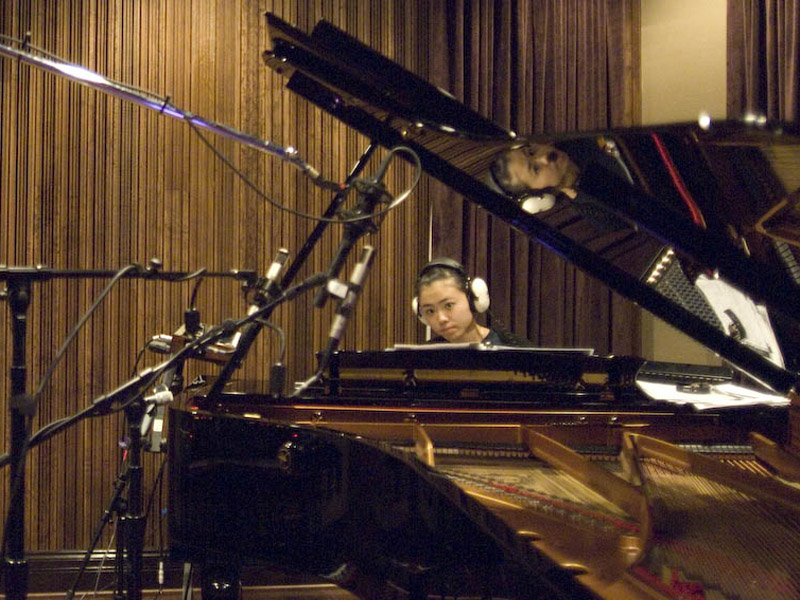
Multiple mics for rock and pop piano
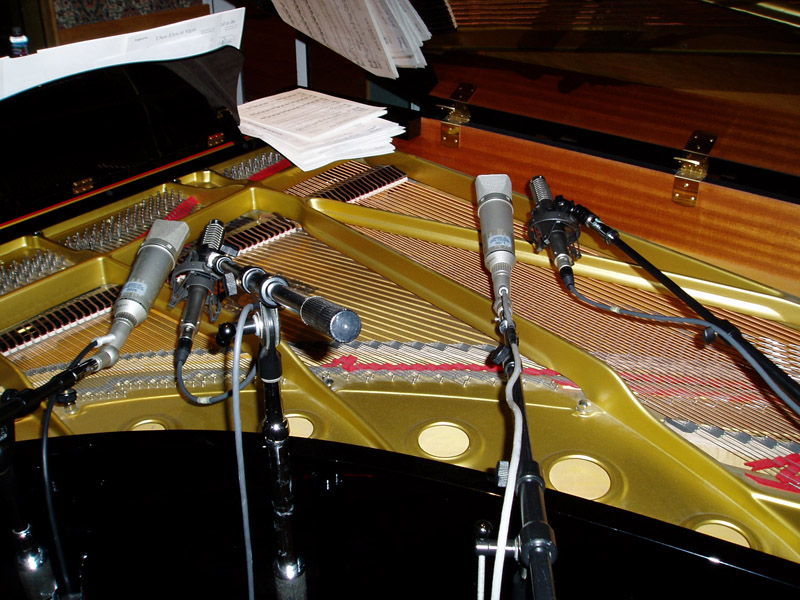
Two R-122s: spaced pair
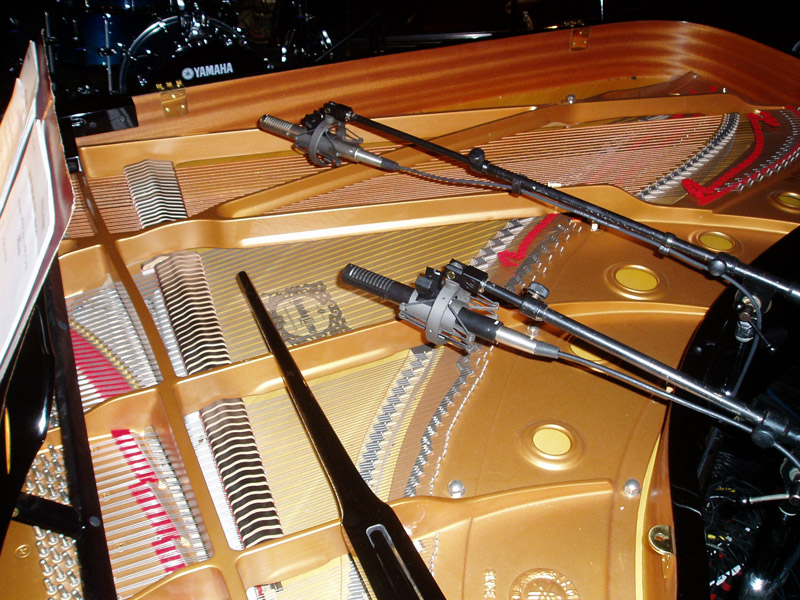
Open the piano lid to full stick and place one microphone about 12 inches above the hammers, halfway between the lowest key and middle C. Place the second microphone at the same height, between the highest key and middle C. This technique gives a brighter, tighter sound which is usually preferable for rock, country and pop. You might also try panning the mics hard left and right.
Two R-121s: Blumlein
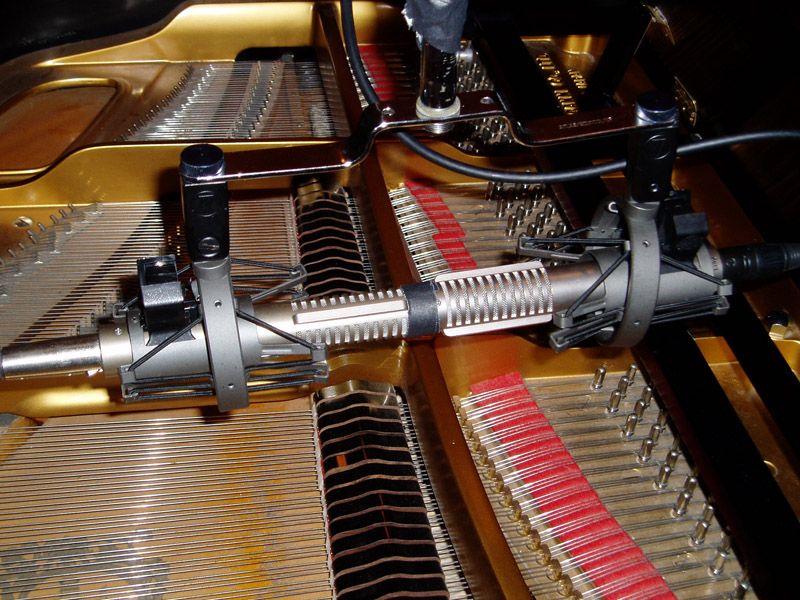
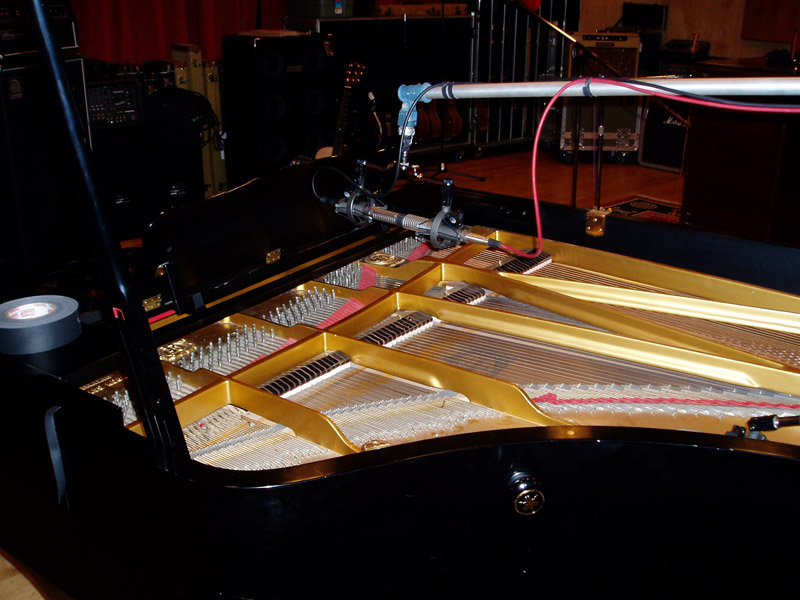
Place a stereo pair of R-series mics such as the R-121 in Blumlein (one mic above the other at 90 degrees apart) directly in the middle of the soundboard over the hammers for a tight, percussive sound. You can also try this position with a stereo Royer SF-12 or SF-24.