
Microphones / Stereo ribbon microphone
SF-12
Uncanny “you-are-there” stereo recordings from one microphone.
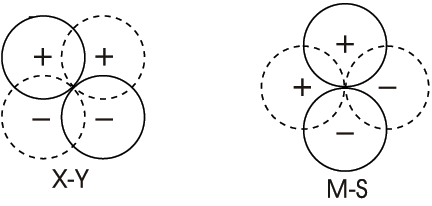
The SF-12 stereo coincident ribbon microphone combines high quality audio performance with outstanding stereo separation and imaging. It is a modern ribbon design with no audible diffraction effects or cavity resonance. An SF-12 is actually two matched ribbon microphones placed one above the other, each aimed 45 degrees from center in the classic Blumlein configuration.

From the library
Hear the SF-12
- Hans Zimmer, “Light”Orchestra, cello and clarinet from “The Thin Red Line,” recorded at The Newman Scoring Stage. Recorded and mixed by Alan Meyerson, produced by Hans Zimmer.
- Ukrainian Radio and Television OrchestraFull orchestra recorded with an SF-12 at the orchestra’s studios in Kiev. Engineer and producer: Russell Dawkins.
- Jim Cox, “Boogie Woogie Stomp”Piano recorded with an SF-12 at Capitol Studios (B room), Los Angeles. Engineer: Tommy Vicari.
The frequency response is excellent regardless of the angle of sound striking the ribbons, and off-axis coloration is negligible. The SF-12 utilizes two 1.8-micron ribbons, each weighing approximately 1/3 milligram and producing superb transient response. The two ribbon transducers are magnet/pole piece structures that produce a wide, uniform frequency response with no substantial peaks or dips. The case is ingot iron and forms part of the magnetic return circuit, an effective system with low leakage flux which accounts for the relatively high sensitivity in a trim package.
The SF-12’s extension cable comes with a Y adapter that splits into separate 3-pin male XLR connectors labeled “Upper” and “Lower,” for the upper and lower capsules of the microphone (when held vertically).
Recording
The SF-12 is uncanny for creating “you-are-there” stereo recordings that capture not only the instrument being recorded but, depending on positioning, the acoustic environment as well. If you pay careful attention to the sound of an instrument or ensemble in the recording environment, you will likely find a place where it sounds best to you. Position the SF-12 in that place and you will capture that sound.
A beautiful example: an engineer used one well-positioned SF-12 to create a stunning recording of the Ukrainian Radio Television Orchestra. Initially, the conductor was not happy with the engineer’s desire to record with one microphone, but after hearing the results, the engineer has been invited back to record the orchestra a number of times, with the same one microphone, his SF-12.
Drum overheads
The SF-12 is an excellent choice for drum overheads, where its stereo imaging and realism help to create powerful, dynamic drum tracks. In a jazz setting, recording the kit flat provides extremely natural sounding cymbals, tom-toms and snares. In rock and pop recordings where you’d like to capture the meat of the kit but with more air on the cymbals to help them cut more aggressively, simply open the top end up with EQ. Ribbons take EQ extremely well because they generate virtually no self distortion. When you boost a frequency, even by many dB, you’ll bring up only the musical response you’re looking for, without unpleasant distortion artifacts joining the party.
Recording in mono
Phase compatibility between the two sides of the SF-12 is excellent, allowing you to combine the two channels for mono recording without creating phase artifacts. This is particularly useful when capturing a wide sound field in mono; for instance, a singer who tends to move off the “sweet spot” of a mono microphone. Either side of the SF-12 can also be used individually as a mono microphone.

Features
- True stereophonic (Blumlein and M-S) recording from one microphone
- High SPL capabilities
- No internal active electronics to overload or produce distortion up to maximum SPL rating
- Extremely low residual noise
- Ribbon element not affected by heat or humidity
- Absence of high frequency phase distortion
- Equal sensitivity from front or back of elements
- Consistent frequency response regardless of distance
- High efficiency, matching toroidal transformers
- Very low magnetic leakage
Applications
- Drum overheads
- Percussion instruments
- Brass and woodwinds
- Horn sections
- Acoustic piano
- Harp
- Choirs
- Solo strings
- String sections
- Orchestra
- Acoustic and electric guitars
- Background vocals
- Ambiance
- Stereo to mono
Technical specifications
| Acoustic operating principle | Electrodynamic pressure gradient |
|---|---|
| Polar pattern | Symmetrical figure-8 |
| Generating element | 1.8-micron aluminum ribbon |
| Frequency response | 30 - 15,000 Hz +/- 3dB |
| Sensitivity | > -52 dBv Re. 1v/pa |
| Output impedance | 300 Ohms @ 1K (nominal) |
| Rated load impedance | >1500 Ohms @ 300 Ohms nominal impedance |
| Maximum SPL | >130dB |
| Output connector | Male XLR 5 pin (stereo) |
| Dimensions | 206mm L, 25mm W (8" L, 1" W) |
| Weight | 369g (13 oz) |
| Finish | Matte Black Chrome / Dull Satin Nickel optional |
Polar pattern
Frequency response

Reviews
Pro Audio Review: Royer SF-12 Stereo Ribbon Microphone, by Dr. Frederick J. Bashour
Pro Audio Review: Royer SF-12 Stereo Ribbon Microphone: A 2nd Opinion, by Russ Long
Recording Magazine: Royer SF-12 Ribbon Microphone: Smooth as a Ribbon?, by Martin Klingmeyer
Drum! Magazine: SF-12 & R-121 Review, by Jon Cohan with Sean Carberry
Accessories and related products
- Extension cable with Y adapter (“Upper” and “Lower” 3-pin XLR outputs)
- SF-24 active stereo ribbon microphone
- SF-2 active ribbon microphone