
Microphones / Active ribbon microphone
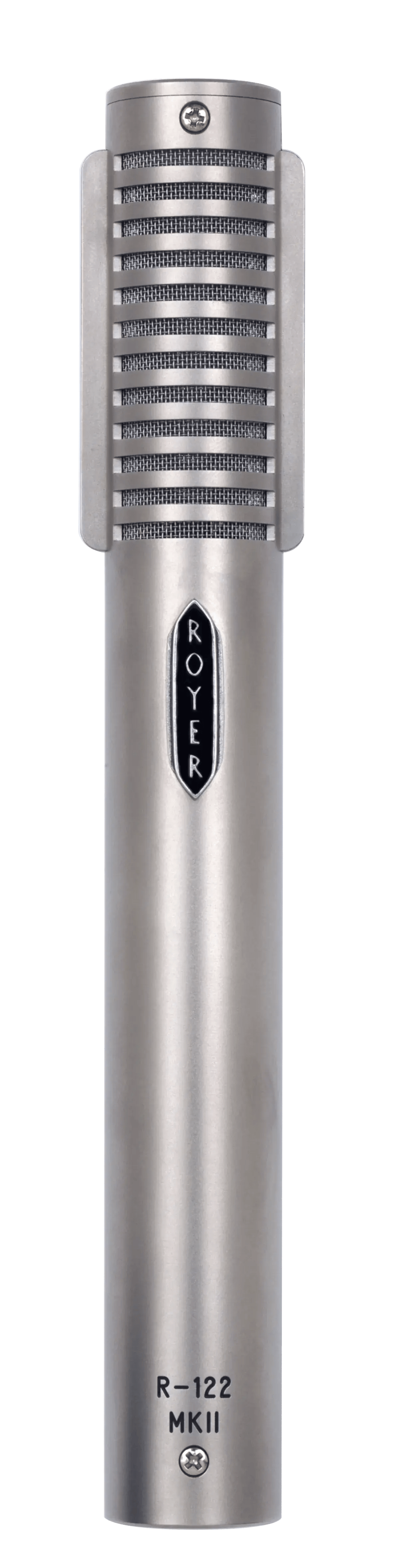
R-122 MKII
The R-122 MKII takes the R-122 to a whole new level, delivering unprecedented flexibility for ribbons with a switchable -15 dB pad and a switchable bass-cut filter.
In 2002 we introduced the R-122, the world’s first phantom powered, active ribbon microphone. It was a revolutionary development in ribbon mics, combining impedance matching circuitry with condenser-like output levels that allowed the R-122 to be used on even the quietest sound sources and paired with virtually any preamplifier. The R-122 MKII takes the R-122 to a whole new level, delivering unprecedented flexibility for ribbons via the addition of a switchable -15 dB pad and a switchable bass-cut filter.
From the library
Hear the R-122 MKII
- Andrew Synowiec: Vibey Acoustic InstrumentsAcoustic guitar, 12-string, baritone acoustic and bouzouki on the R-122 MKII and R-122. Nine audio takes and a video.
- R-122 MKII Tests: Electric Guitar & DobroTwo videos of electric guitar and dobro on the R-122 MKII and R-121. Recorded by Michael Wagener at WireWorld Studio, Nashville.
- Arturo Sandoval’s “Trumpet Evolution”Big band, brass and drums at Capitol Studios, Studio A, with the R-122, R-121 and SF-12. Engineer: Al Schmitt. Producer: Gary Grant.
The switches are completely out of the circuit when disengaged, so when both are off, the microphone is for all purposes an original R-122. The switches are located on the back of the microphone and recessed to prevent accidental activation.
The pad and the bass cut
The R-122 MKII’s switchable -15 dB pad is positioned before the microphone’s electronics and, when engaged, eliminates any potential for headroom-related distortion on even the loudest sound sources. Wide-open electric guitars are no problem. With the pad in, the R-122 MKII’s output is actually 2 dB lower than our flagship R-121.
The R-122 MKII’s well-designed pad has no sonic imprint. Once levels are matched, the R-122 MKII reproduces sound exactly the same with the pad in as with the pad out.
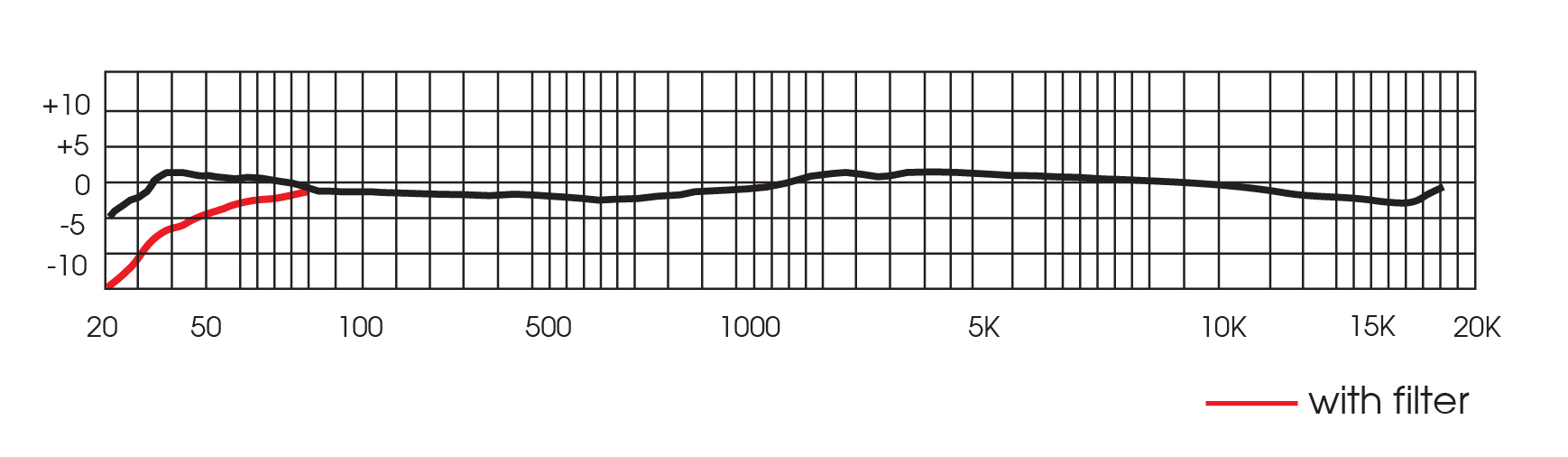
When switched in, the R-122 MKII’s bass cut starts filtering at 100 Hz, 6 dB per octave, effectively reducing the mic’s bass buildup due to proximity effect. This smooth filter is extremely useful on vocals, many acoustic instruments, and close-miked electric guitars when less bottom end is desired.
Gain and impedance matching
Conventional ribbon microphones need high-quality, high-gain microphone preamplifiers to record softer sound sources. The R-122 MKII’s output level is much higher, allowing you to use practically any mic preamplifier or board pres to record even the quietest sounds. The R-122 MKII contains a fully balanced, hand-wired, discrete head amplifier system utilizing a specially wound toroidal transformer and ultra-low noise FETs. This system is extremely quiet and brings the R-122 MKII’s sensitivity to -36 dB, all while allowing for high SPL recording. Go ahead and plug a MKII into any preamp with average gain: you’ll get full Royer performance and enough level to drive any recording medium.
There is no increase in self-noise in the R-122 MKII’s higher sensitivity. All of the mic’s additional output comes from its large, specially wound toroidal transformer, that wonderful thing called “free gain.” The phantom-powered circuitry provides impedance conversion only, adding no noise of its own.
The R-122 MKII’s active electronics put a perfect load on the ribbon element at all times, allowing the microphone to deliver its full sonic potential regardless of the input characteristics of the following pre. Due to its low-impedance output, R-122 MKIIs can be used on extremely long cable runs with minimal signal loss. In addition, the ribbon element can’t be damaged by phantom power, miswired cables or electrical glitches.
The R-122 MKII’s electronics are hand-wired in our Burbank, CA factory. The microphone utilizes a special Royer-designed toroidal transformer that delivers a faster transient response than traditional ribbons, making it a first-call ribbon mic for drum overheads, percussion, and all acoustic instruments.
Should I use an R-122 MKII or an R-121?
The R-122 MKII is every bit as tough as our R-121. It is similar to the R-121, but the faster transient response and larger size of the MKII’s audio transformer translate into more open highs and a tighter, more focused low end response. Because of this, engineers often choose R-122 MKIIs over R-121s for drum overheads, acoustic instruments and vocals. R-121s sometimes edge out R-122 MKIIs on electric guitars and brass, but it’s a matter of taste.
If you’re recording mostly electric guitars and brass, we usually suggest going with the R-121. The MKII is equally good on these instruments, but you may not need (or want) the additional openness in the highs from the faster transient response, and you certainly won’t need the MKII’s higher sensitivity on these high SPL applications. If you plan on using the mics primarily for drum overheads, vocals, piano, acoustic instruments, strings and classical music applications, we highly recommend going with the R-122 MKII, which will also be excellent on electric guitars, percussion and brass.
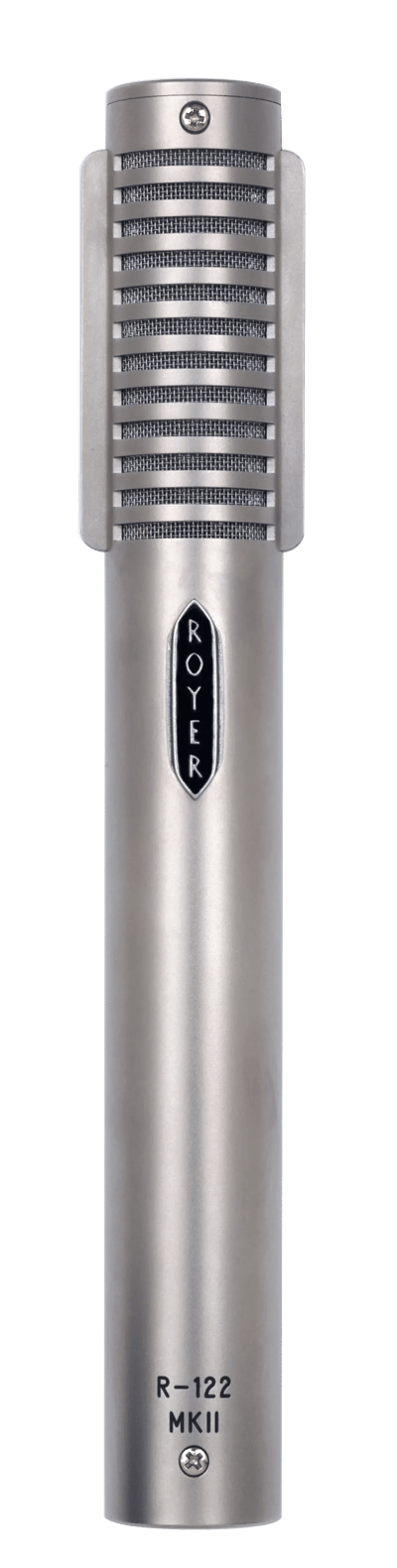
The R-122 MKII’s patented offset ribbon transducer (Patent # 6,434,252) positions the ribbon element closer to the front (logo) side of the microphone, giving the ribbon more room to move within the prime magnetic field while maintaining full frequency response during high SPL recordings. It also makes the MKII two mics in one: the back of the microphone records slightly brighter than the front side at distances of three feet and closer, which can be extremely useful for acoustic guitars, vocals, drum overheads and other sources where you may want a slightly brighter response.
As with all Royer ribbons, pushing up the faders on your ribbon-recorded tracks at mixdown is a revelation. When your tracks sound natural and real, there’s nothing to fight or “fix” and instruments drop into the mix easily.
Available in matched pairs
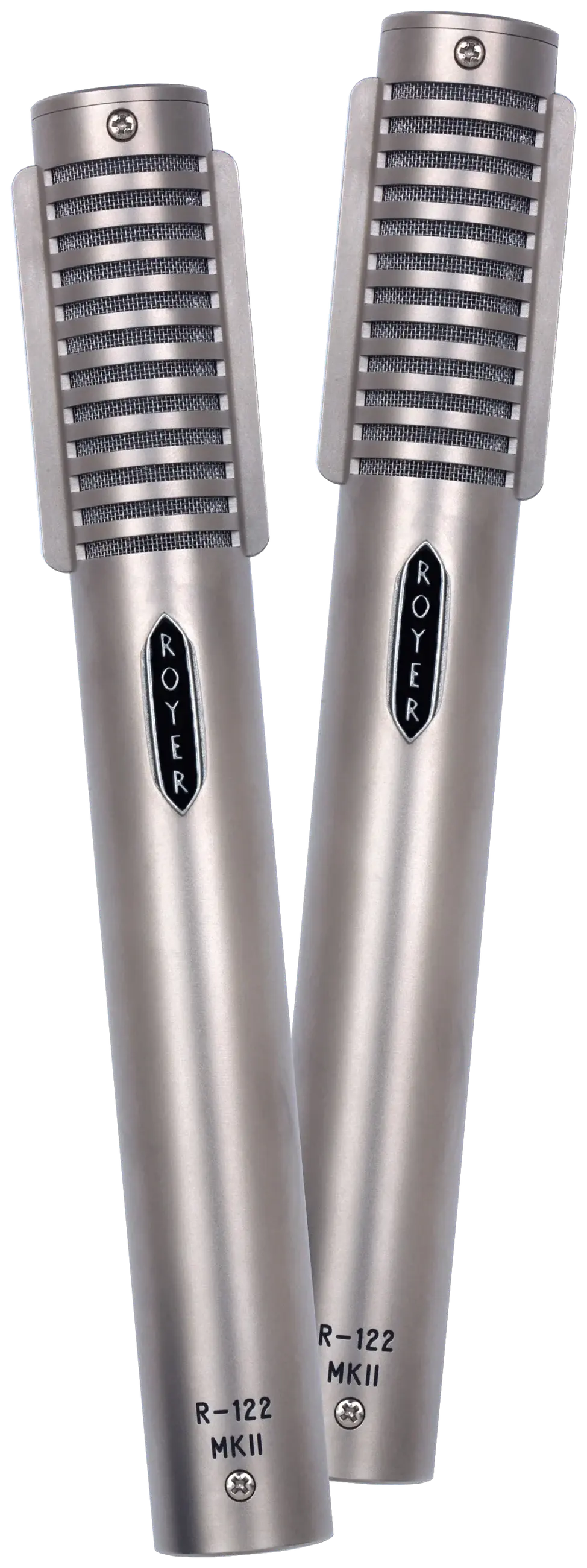
The R-122 MKII is available as a matched pair. Matched pairs of Royer mics are consecutively serial numbered and shipped together as a perfect match. Use a pair for stereo recording: drum overheads, acoustic piano, choirs and orchestras.
Features
- Phantom powered circuitry provides high output and impedance matching
- -15 dB pad before the mic’s electronics gives more headroom when activated
- Bass cut filter reduces proximity effect and bass below 100 Hz when activated
- High SPL capabilities
- No distortion up to maximum SPL rating
- Extremely low residual noise
- Ribbon element is not affected by heat or humidity
- Absence of high frequency phase distortion
- Equal sensitivity from front or back of element
- Consistent frequency response regardless of distance
- Rear side of mic records slightly brighter when three feet or closer to sound source
- Available in matched pairs
Applications
- Electric guitar amps
- Acoustic guitar
- Drum overheads
- Percussion instruments
- Brass and woodwinds
- Horn sections
- Acoustic piano
- Harp
- Solo strings and string sections
- Choirs and orchestras
- Commercial broadcast
- Voice over
Technical specifications
| Acoustic operating principle | Electrodynamic pressure gradient with active electronics |
|---|---|
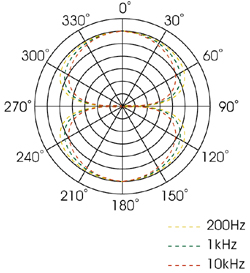
| Polar pattern | Figure-8 |
| Generating element | 2.5-micron aluminum ribbon |
| Magnets | Rare Earth Neodymium |
| Frequency response | 30 - 15,000 Hz ±3 dB |
| Sensitivity | -36 dB (re. 1v/pa ±1 dB) |
| Switchable pad | -15 dB |
| Switchable bass cut | 100 Hz (6 dB per octave) |
| Self-noise | < 18 dB |
| Output impedance | 200 Ohms, balanced |
| Output connector | Male XLR 3-pin (Pin 2 Hot) |
| Rated load impedance | 1K-Ohm minimum |
| Maximum SPL | >160dB @ 1kHz, >135 dB @ 30Hz |
| Power requirements | 48-Volt Phantom only |
| Supply current | 4 mA |
| Dimensions | 206mm L x 25mm W (8 1/8" L x 1" W) |
| Weight | 309 grams (10.9 oz) |
| Finish | Burnished Satin Nickel / Matte Black Chrome optional |
| Accessories | Protective wood case, mic sock |
| Optional accessories | Wind screen, shock mount |
| Microphone warranty | 10 years to original owner (repair or replace at Royer’s option) |
| Ribbon element warranty | One year |
Polar pattern
Frequency response
Reviews
Recording Magazine: R-122 MKII Review, by Paul Vnuk Jr.
Sound On Sound: Royer R-122 MKII
Pro Audio Review: Royer R-122 MKII Active Ribbon Mic, by Russ Long
Accessories and related products
- Sling-Shock shock mount
- R-121 ribbon microphone
- R-122V tube ribbon microphone